AI MarketingVideo Blog3 min read
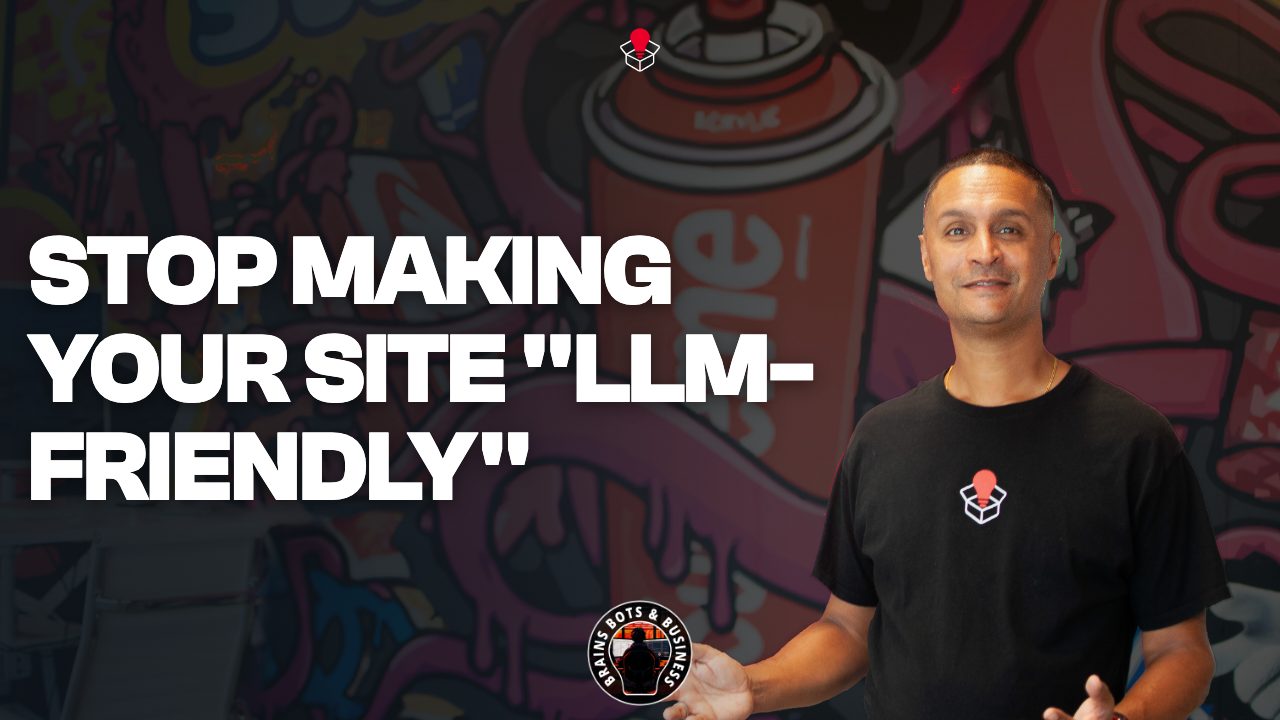
Don't strip your website down for AI search. Keep the rich experience your human buyers need, and add structure underneath so AI systems can read the same page. That's the argument of Episode 149 of Brains Bots and Business, "Stop Making Your Website 'LLM-Friendly' (Do This Instead)", and it's Sandeep's view of where marketers are going wrong.
Key takeaways
- Marketers are chasing "AI visibility" by simplifying their sites. In Sandeep's view, that hurts human buyers.
- As we see it, a visitor who arrives from an AI answer has already had a conversation about your brand, so they deserve a full experience.
- The alternative is a dual-layer website: a rich page for people, with clean code and structured data in that same page for machines.
What is the GEO trap?
GEO stands for Generative Engine Optimization. As of the episode (August 2026), Sandeep sees marketers treating it like the new SEO: everyone wants their brand to show up in AI answers, and nobody wants to be invisible.
The trap, in his view, is how they go about it. They chase synthetic visibility scores and restructure their sites into plain, "LLM-friendly" formats. By stripping the site down for a bot, they hurt the on-site experience for the humans who actually buy. His read is that engagement drops and conversions suffer.
Why do AI-referred visitors need more, not less?
As Sandeep sees it, an AI-referred visitor isn't a cold click. By the time they land on your site, they've already talked with an AI about your brand and asked follow-up questions. They arrive primed and further along.
Sending that visitor to a generic, bot-focused page fails them. They're ready for the real thing: your design, your copy, a clear next step.
What is a dual-layer website?
It's one website, built for two kinds of reader.
- For people: a rich, clear experience with strong design and obvious calls to action, built to help a buyer decide.
- For machines: the same content, made easy to read, with clean code, schema markup and direct answers on the page.
The key point is that both layers carry the same content. Nothing is shown to AI systems that a visitor can't see.
For another take on putting people first, see Lo-Fi Equals High Trust: Why Imperfect Content Wins in 2026.
What should you do instead?
Stop optimizing for a score nobody can agree on. Build the site for your buyer first, then make the same content easy for AI systems to read.
This connects to how we think about using AI to extend good work rather than flatten it. See The 1-to-10 Rule: Repurpose Content With AI.
FAQ
What is Generative Engine Optimization (GEO)?
Per the episode, it's the practice of optimizing for visibility in AI search answers, which many marketers are treating as the new SEO.
Why can GEO hurt conversions?
In Sandeep's view, stripping a site down into plain "LLM-friendly" formats hurts the experience for human buyers, so engagement and conversions suffer.
What is a dual-layer website?
One site with a rich, high-converting experience for people, and clean code, schema markup and direct answers in the same page so AI systems can read it.
Related Links
- Watch the episode on YouTube
- Lo-Fi Equals High Trust: Why Imperfect Content Wins in 2026
- The 1-to-10 Rule: Repurpose Content With AI
- Clone Your CEO for Video With AI Avatars
Brains Bots and Business is where Sandeep shows you how to actually use AI to grow your company.
Sandbox Media is a marketing and AI agency in Milton, Ontario, serving businesses across the GTA and Canada.